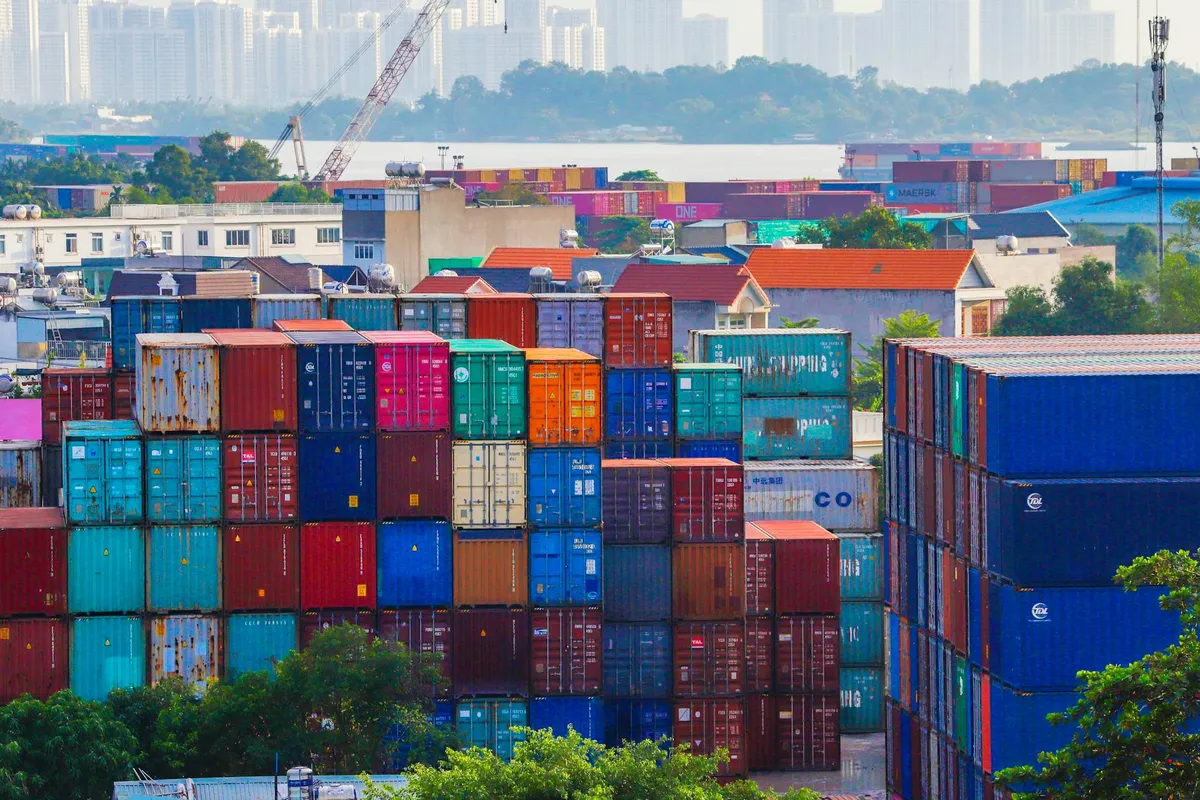
Global steel trade flows have shifted measurably over the past five years in patterns that warrant careful examination. The shifts are not principally cyclical responses to changing demand conditions; they reflect structural reorganisation of how steel moves across international markets, with implications for capital allocation, supply chain design, and competitive positioning across affected industries.
The observable shift
Aggregated data on cross-border steel trade indicates that the volume of steel moving in traditional patterns — primarily Asian production exported to North American and European consumers — has declined as a share of total trade. Concurrently, regional production within North America and Europe has expanded, and trade flows have reorganised around shorter-distance movements within continental groupings.
The shift is not absolute. Asian steel exports remain substantial. North American and European imports continue. The pattern, however, is moving from globally-integrated supply chains toward regionally-organised ones, with consequential implications for the firms operating within them.
Three structural drivers
Examination of the underlying factors suggests three drivers operating concurrently.
The first is the persistence of trade-policy interventions. Tariffs, anti-dumping duties, and similar measures applied to steel imports across multiple jurisdictions over the past five years have increased the friction of long-distance steel movement. Some interventions have been temporary; others have proven durable. The aggregate effect has been to make domestic and regional production more competitive relative to imports than was the case under earlier trade conditions.
The second is the rising importance of supply chain resilience considerations. Disruptions affecting global shipping, energy markets, and specific producing regions have made shorter and more diversified supply chains more attractive to industrial buyers. The willingness to pay modest premiums for shorter supply distances has become more pronounced.
The third is the expansion of electric-arc furnace (EAF) capacity in markets that previously relied principally on imports. EAF technology, with lower capital requirements and shorter construction timelines than blast furnace capacity, has allowed faster expansion of domestic production in regions where prior expansions were uneconomical.
Implications for producers
The restructuring has produced winners and losers among steel producers.
Domestic producers in regions experiencing import substitution have, in aggregate, expanded volumes and held pricing more effectively than they did under prior conditions. The combined effects of import friction and resilience-driven preferences for regional supply have created favourable conditions for these producers.
Asian export-oriented producers have faced more difficult conditions. Demand for their output in traditional export markets has weakened; competitive pressure to replace lost export volume with regional sales has intensified.
Producers operating in trade-exposed segments — high-grade steels, specialty products, materials where regional capacity is limited — have experienced more nuanced effects, with some segments continuing to flow internationally while others have regionalised.
Implications for consumers
For industrial steel consumers, the restructuring has produced mixed effects.
Manufacturers in regions experiencing capacity expansion have benefited from improved supply security and from regional pricing dynamics that, in some periods, have been more favourable than international ones. The cost of supply chain risk has, for these firms, declined.
Manufacturers in regions where capacity has not expanded have faced more difficult conditions. Continued reliance on imports under more frictional trade conditions has produced both pricing volatility and supply uncertainty.
Across all consumer segments, the importance of supplier-relationship management has increased. The relatively commoditised nature of much steel buying in earlier periods has given way to a more relationship-intensive procurement environment.
The role of green steel transition
Overlaid on these trade-flow shifts is the emerging green steel transition — the move toward lower-carbon production methods including hydrogen-based direct reduction, carbon capture-equipped blast furnaces, and expanded scrap-based EAF production.
The transition is itself reorganising trade flows. Producers investing in green steel capacity are typically located in regions with access to renewable energy and policy support; producers without such access face structural disadvantages over the medium term. The geography of competitive steel production is, in consequence, shifting in ways that overlap with but are not identical to the trade-policy-driven shifts.
For buyers with sustainability requirements, the green steel transition introduces additional preference for specific production sources, further reinforcing regionalisation patterns.
What is not driving the restructuring
Several commonly-cited factors appear, on examination, to be less important than is sometimes claimed.
Currency movements have played some role but do not adequately explain the persistent multi-year pattern. Trade-policy and structural drivers explain more of the variation than currency effects do.
Demand variation has affected absolute volumes but has not principally driven the share-of-trade shifts. Even in periods of strong demand, the regional share has continued to grow at the expense of global trade share.
Quality differentials between Asian and Western production are sometimes invoked but do not, on examination, account for the observed pattern. Major Asian producers continue to produce steel meeting international quality standards; the limitation is increasingly in market access rather than in product capability.
Strategic implications
For industrial firms with significant steel exposure, several strategic considerations emerge from the data.
Procurement strategies optimised for the prior global trade environment may underperform in the current regionalising environment. Firms that have not revisited supplier qualification, contract structures, or regional sourcing balances over the past several years are likely operating with strategies designed for conditions that no longer apply.
Capital allocation decisions involving steel-intensive projects benefit from explicit consideration of regional supply availability and pricing dynamics. The assumption that global markets will reliably supply steel at predictable prices has weakened; project economics increasingly depend on regional supply specifics.
Long-term supply agreements have, in many cases, become more valuable than they were in periods of more fluid global trade. The willingness to commit to longer-term supplier relationships, in exchange for supply security and pricing stability, is being rewarded in the current environment more than it was in prior periods.
The restructuring, in summary, is not complete and its end-state is not yet clearly visible. Firms operating in steel-exposed industries would benefit from explicit analytical attention to its progression and from strategic frameworks designed for an environment where regional supply considerations are more consequential than they have been for several decades.