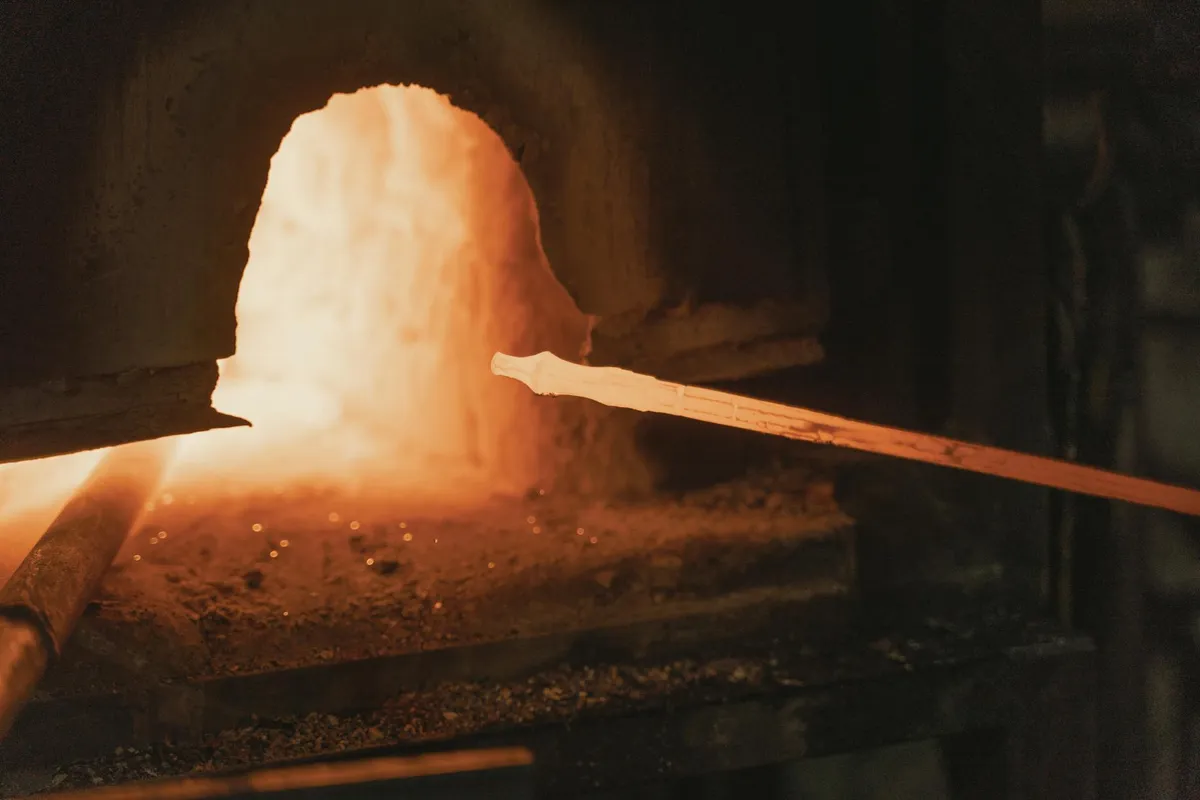
Heat treatment is, in steel manufacturing, simultaneously one of the most consequential operations and one of the most variably executed. Industry data examining defect classifications across large samples of finished components indicates that heat treatment failures account for a substantial portion of metallurgical defects — frequently exceeding the contribution of material-selection errors. The economic and operational implications warrant explicit examination.
The scale of the issue
Aggregated data from quality reporting systems across multiple steel-manufacturing operations suggests heat-treatment-related defects account for approximately 15 to 25 percent of metallurgical rejections. This range varies with operation type and product mix; firms with high-precision components experience figures toward the upper end of the range, those with more forgiving applications toward the lower.
By comparison, material-selection errors typically account for 5 to 12 percent of metallurgical defects in similar samples. Heat treatment, in aggregate, produces more failures than the choice of material itself does.
The principal failure modes
Examination of heat-treatment failures across the available data identifies several recurring failure modes.
Inadequate hardening. Components fail to reach specified hardness, typically due to undercooled quenching, inadequate austenitising temperature, or insufficient time at temperature. Components subsequently underperform in service or fail short of expected fatigue life.
Excessive distortion. Components warp during quenching beyond what subsequent machining can correct. Causes include uneven heating, inappropriate quench medium selection, or fixture issues. Affected components either require costly remediation or scrap.
Hydrogen embrittlement. Components experience cracking or unexplained failures in service due to hydrogen absorbed during processing not properly baked out. Failures can occur weeks or months after manufacture, complicating root-cause attribution.
Decarburisation. Surface carbon depletion during heat treatment reduces the wear and fatigue properties of the affected zones, often unnoticed during inspection but consequential in service.
Improper tempering. Either inadequate tempering (leaving components too brittle for service loads) or excessive tempering (reducing hardness below specified levels). Both result in components that meet appearance specifications but fail performance requirements.
Why heat treatment failures are systematically underweighted
Several structural factors contribute to the underweighting of heat treatment in operational priority-setting.
Material selection happens at design stage; failures attributable to material choice are visible at the design-engineering level and therefore receive proportionate attention. Heat treatment happens at the manufacturing-operations level; failures attributable to heat treatment are visible at the operations level but often resolved through scrap or rework rather than escalated as design-level concerns.
Heat treatment failures also tend to occur in time gaps that obscure their causes. A component improperly heat-treated may not fail in immediate inspection; it may fail in service weeks or months later, by which time root-cause analysis is more difficult and the contributing operational variables less recoverable.
And heat treatment is, in many operations, partially outsourced or sub-contracted. The visibility of operational variables — temperatures, atmospheres, quench media, time-temperature profiles — is reduced when the work is performed externally. Failures that occur in outsourced operations are harder to investigate and to prevent recurring.
The economics of improved heat treatment
Operations that have invested in heat-treatment control consistently report measurable reductions in metallurgical defect rates. The investment categories that produce the strongest returns include:
- Continuous monitoring of furnace temperatures and atmospheres. Modern instrumentation allows real-time observation of process variables; failures observed in real time are correctable, while failures discovered after the fact frequently are not.
- Standardised heat-treatment recipes for repeating component categories. Documented and controlled recipes produce more reproducible outcomes than recipes maintained informally in the experience of individual operators.
- Hardness and metallurgical inspection of statistically significant samples. Sampling-based inspection identifies systemic process drift earlier than complaint-driven discovery.
- Training and certification of heat-treatment operators. Operators making informed decisions during process variation produce fewer downstream failures than operators following procedures without process understanding.
The returns on these investments are typically positive within twelve to eighteen months for operations with meaningful heat-treatment volumes. The returns are produced principally by reduced scrap and rework rather than by visible new revenue.
What does not produce returns
Several common responses to heat-treatment quality concerns produce limited measurable benefit.
Tightening specifications without operational capability to meet the tighter specifications increases nominal quality requirements without changing actual outcomes. Components are specified to standards the operation cannot reliably hit; the gap is then either ignored or generates substantial rework.
Outsourcing heat treatment to specialised providers can produce benefits but does not, in itself, solve quality concerns. The selection of specialised providers is consequential; not all heat-treatment service providers operate at high capability levels.
Capital investment in newer furnace equipment without parallel investment in process control and operator capability rarely produces proportionate quality improvements. The equipment is necessary but not sufficient; the operational capability is the load-bearing element.
Strategic implications
For manufacturing operations evaluating quality strategy, the data suggests heat treatment warrants higher priority than its current allocation in many operations would imply. The implications fall in several directions.
Operations producing components for high-stakes applications — aerospace, defence, structural infrastructure — should examine whether their heat-treatment capability matches the consequences of failure in their served markets. The exposure created by inadequate heat-treatment capability in these contexts can be substantial.
Operations with significant outsourced heat treatment should evaluate whether the cost savings of outsourcing offset the loss of process visibility and the consequent quality risks. The trade-off varies; in some cases outsourcing is appropriate, in others it has produced measurable quality compromises that justify investment in in-house capability.
Operations expanding capacity should treat heat-treatment investment as a primary consideration alongside production-equipment investment. The asymmetry of failure rates between material decisions and heat-treatment decisions suggests that capacity expansion without proportionate heat-treatment expansion produces capability mismatch downstream.
The longer view
Heat treatment, in steel manufacturing, has historically been treated as a manufacturing process with engineering implications. The data suggests it is more accurately understood as an engineering process with manufacturing implications. The distinction matters for how operations allocate analytical attention, capital investment, and operational priority. The operations that have made this shift — explicitly treating heat treatment as a primary engineering function — consistently produce better quality outcomes than operations that have not.