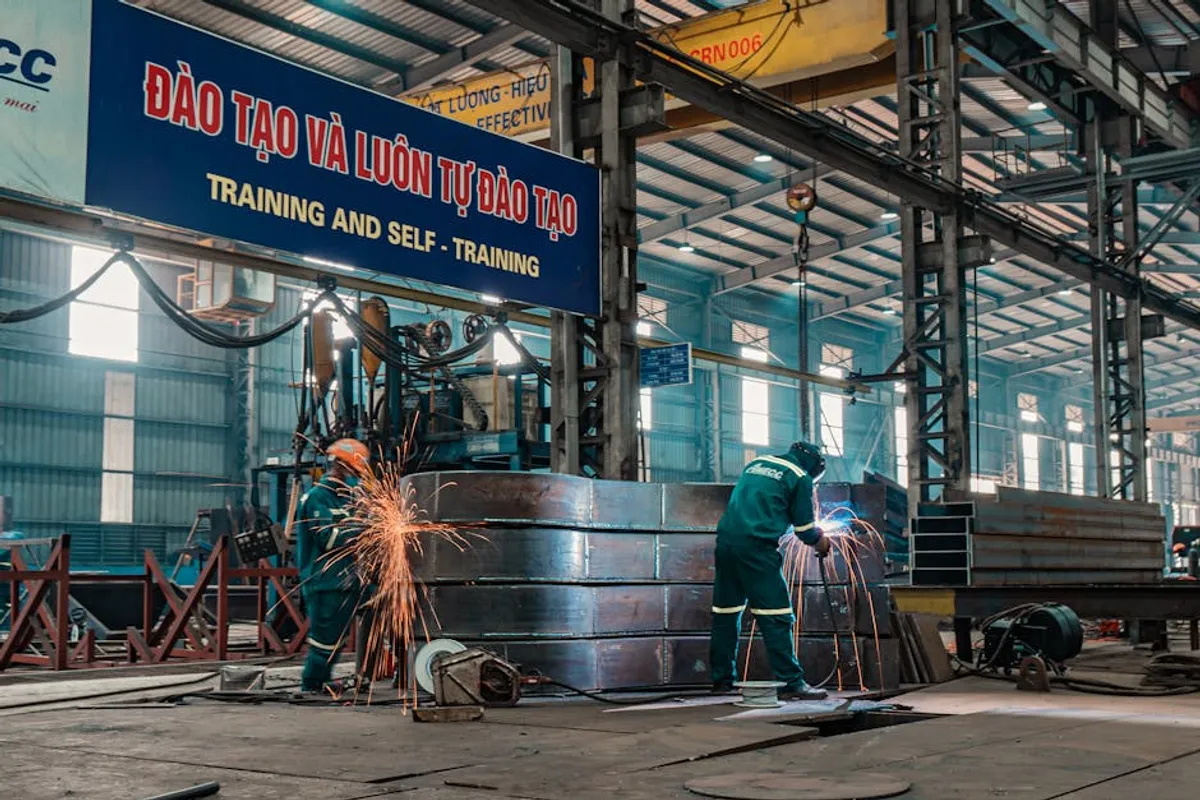
Procuring steel involves navigating a complex landscape of material types, manufacturing processes, and quality standards. For buyers, understanding these fundamentals is critical to securing the right material for specific applications, optimizing costs, and ensuring project success. This guide distills essential knowledge, enabling informed decisions from initial specification to final delivery, focusing on what directly impacts your procurement choices.
Core Steel Types for Procurement
Steel is not a monolithic material; its properties vary significantly based on composition and processing. Buyers must identify the specific type best suited for their application's performance requirements and budget.
Carbon Steel
This category encompasses steels where carbon is the primary alloying element, up to 2.1% by weight. They are generally economical and versatile.
- Low Carbon Steel (Mild Steel): Contains up to 0.25% carbon. Easily formable, weldable, and ductile. Common for structural components, automotive panels, and general fabrication. Its lower strength is a trade-off for ease of processing.
- Medium Carbon Steel: Contains 0.25% to 0.60% carbon. Stronger and harder than low carbon steel, but less ductile and weldable. Used for axles, gears, and railway wheels where strength and wear resistance are needed.
- High Carbon Steel: Contains 0.60% to 2.1% carbon. Very hard and strong, but brittle. Ideal for tools, springs, and high-wear components requiring excellent edge retention or elastic properties. Requires careful heat treatment.
Alloy Steel
These steels incorporate additional alloying elements beyond carbon, such as manganese, silicon, nickel, chromium, molybdenum, and vanadium, to enhance specific properties like strength, hardness, toughness, or corrosion resistance.
Best for: Applications demanding superior performance beyond what carbon steel can offer, such as high-temperature environments, extreme pressures, or specific wear resistance. Examples include aircraft components, pressure vessels, and heavy machinery parts. The cost increases with the type and quantity of alloying elements.
Stainless Steel
Defined by a minimum of 10.5% chromium content, stainless steels form a passive oxide layer that provides excellent corrosion resistance. They are also known for their aesthetic appeal and hygienic properties.
Key Buyer Considerations:
- Austenitic (e.g., 304, 316): Non-magnetic, excellent corrosion resistance, good formability and weldability. Widely used in food processing, medical equipment, and architectural applications. 316 offers superior resistance to chlorides.
- Ferritic (e.g., 430): Magnetic, good corrosion resistance, but less ductile than austenitic. Often found in automotive trim and kitchenware.
- Martensitic (e.g., 410, 420): Magnetic, can be heat-treated for high strength and hardness, but has lower corrosion resistance. Used for knives, surgical instruments, and turbine blades.
Tool Steel
Designed for manufacturing tools, these steels possess exceptional hardness, strength, abrasion resistance, and the ability to maintain shape at elevated temperatures. They are typically alloyed with elements like tungsten, molybdenum, vanadium, and chromium.
Common Uses: Cutting tools, dies, molds, and punches. Buyers select based on the specific demands of the tool's application, considering factors like impact resistance, hot hardness, and wear characteristics.
Primary Manufacturing Processes
Understanding how steel is produced and shaped helps buyers specify materials correctly and anticipate potential material characteristics or limitations.
Steelmaking: Electric Arc Furnace (EAF) vs. Basic Oxygen Furnace (BOF)
EAF: Primarily uses recycled scrap steel. Offers flexibility in batch sizes and alloy additions, making it suitable for specialty steels.
BOF: Relies on molten pig iron (from iron ore) and some scrap. Produces large volumes of primary steel efficiently, common for structural and flat products.
Buyer Impact: EAF steel often has a higher recycled content, which can be a sustainability consideration. The choice of steelmaking process does not directly dictate final product quality but influences the raw material source and production scale.
Shaping and Forming
After steelmaking, molten steel is cast into semi-finished forms (slabs, blooms, billets) which are then shaped.
- Hot Rolling: Steel is heated above its recrystallization temperature (typically over 1700°F or 925°C) and passed through rollers. This process reduces thickness, refines grain structure, and improves mechanical properties. Hot-rolled products have a rougher surface finish and less precise dimensions.
- Cold Rolling: Performed at room temperature on hot-rolled material. Improves surface finish, dimensional accuracy, and mechanical properties like yield strength and hardness. Cold-rolled products are generally more expensive due to additional processing.
- Forging: Involves shaping metal through localized compressive forces using hammers or presses. Creates parts with superior strength and grain flow, often used for critical components in automotive, aerospace, and energy sectors.
- Extrusion: Pushes metal through a die to create a specific cross-sectional profile. Common for producing long, uniform shapes like rods, pipes, and complex profiles.
Key Buyer Specifications and Standards
Precise specifications are paramount for ensuring that the procured steel meets performance requirements and integrates seamlessly into your operations.
Material Standards and Grades
Organizations like ASTM (American Society for Testing and Materials), ISO (International Organization for Standardization), and EN (European Norms) publish standards that define chemical composition, mechanical properties, and testing methods. Specifying a standard (e.g., ASTM A36 for structural steel, AISI 304 for stainless) ensures a common understanding of material characteristics.
Chemical Composition
The exact percentages of alloying elements directly dictate the steel's properties. Buyers must specify composition ranges relevant to their application, especially for welding, heat treatment, or corrosion resistance.
Mechanical Properties
These quantify how steel reacts to applied forces:
- Tensile Strength: Maximum stress a material can withstand before breaking.
- Yield Strength: Stress at which a material begins to deform plastically.
- Hardness: Resistance to indentation.
- Impact Resistance (Toughness): Ability to absorb energy and deform plastically without fracturing.
- Elongation: Measure of ductility, how much a material can stretch before fracturing.
Dimensional Tolerances and Surface Finish
Tolerances: The permissible variation in dimensions (thickness, width, length). Tighter tolerances increase cost but are crucial for precision applications.
Surface Finish: Refers to the texture and appearance (e.g., rough, smooth, polished). Influences aesthetic appeal, corrosion resistance, and suitability for coatings or further processing.
Ensuring Quality and Compliance
Verifying the quality of procured steel is a non-negotiable step to mitigate risks and ensure product integrity.
Pro Tip: Always request and thoroughly review Mill Test Certificates (MTCs) for every batch of steel. These documents provide crucial traceability, verifying the material's chemical composition and mechanical properties against specified standards. An MTC is your primary assurance of quality and compliance, detailing melt number, heat treatment, and test results.
Supplier Audits: Conducting audits of potential suppliers' manufacturing facilities and quality management systems (e.g., ISO 9001 certification) provides insight into their operational capabilities and commitment to quality. This is particularly important for high-volume or critical component procurement.
Third-Party Inspection: For large or critical orders, engaging an independent third-party inspection agency can provide an unbiased verification of material quality, dimensions, and compliance with specifications before shipment.
Strategic Procurement Insights
Beyond material specifications, effective steel procurement involves strategic supplier engagement and cost management.
Supplier Selection: Evaluate suppliers not only on price but also on their track record for reliability, quality consistency, lead times, and communication. A supplier's technical support capabilities can be invaluable for complex projects or troubleshooting.
Cost Drivers: Steel pricing is influenced by global commodity markets, alloying element costs, energy prices, transportation, and the complexity of processing. Understand these factors to anticipate price fluctuations and negotiate effectively. Volume discounts and long-term contracts can offer cost stability.
Long-Term Relationships: Establishing durable relationships with trusted steel suppliers can lead to benefits such as preferential pricing, improved lead times, access to technical expertise, and more flexible order management. These partnerships foster mutual understanding of requirements and capabilities.
Frequently Asked Questions
What distinguishes hot-rolled from cold-rolled steel?
Hot-rolled steel is processed at high temperatures, resulting in a rougher surface, less precise dimensions, and generally lower strength. Cold-rolled steel is processed at room temperature, offering a smoother finish, tighter tolerances, and increased strength and hardness due to strain hardening.
Why are material certifications crucial for steel buyers?
Material certifications, like Mill Test Certificates (MTCs), provide documented proof that the steel meets specified chemical composition and mechanical property requirements. They ensure traceability, compliance with industry standards, and are essential for quality control and regulatory adherence.
How do buyers select the appropriate steel grade for their application?
Selection involves evaluating the application's specific requirements for strength, hardness, corrosion resistance, weldability, formability, and operating environment (e.g., temperature, chemical exposure). Consulting with material engineers or experienced suppliers can help match performance needs with suitable steel grades and standards.
What factors primarily influence steel pricing in the market?
Steel prices are driven by the cost of raw materials (iron ore, scrap, alloying elements), energy costs for production, transportation expenses, global supply and demand dynamics, and geopolitical events. The complexity of processing and the volume of the order also significantly impact the final price.