
Selecting appropriate welding projects for high school students requires a balanced consideration of safety, skill development, and practical application. The goal is to introduce fundamental welding concepts and techniques while ensuring a safe learning environment and producing tangible, useful outcomes. This guide details how to choose, specify, and acquire materials for projects that build foundational skills and foster confidence in aspiring welders.
Choosing Effective High School Welding Projects
Project selection should align with the students' current skill level and the available equipment. Beginner projects focus on basic joint types and consistent bead placement, while intermediate and advanced projects introduce more complex geometries, material types, and finishing techniques. The progression should be logical, building upon previously learned skills.
Considerations for Project Selection
- Skill Level: Start with flat, simple joints (butt, lap, T-joint) using mild steel. Progress to out-of-position welding, then to more intricate designs or different materials like aluminum.
- Available Equipment: Ensure projects are feasible with the welding machines (MIG, Stick, TIG), cutting tools, and safety gear present in the shop. Avoid projects requiring specialized equipment if it's not accessible.
- Time Constraints: High school classes often have limited durations. Projects should be completable within a reasonable timeframe, allowing for instruction, practice, welding, and finishing.
- Material Cost: Keep material costs manageable. Mild steel is generally the most economical choice for training.
Best for: Developing foundational skills and understanding material properties through practical application.
Essential Safety Protocols for Welding Environments
Safety is paramount in any welding operation, particularly in a high school setting. Establishing and enforcing strict safety protocols protects students and instructors and instills responsible work habits.
Personal Protective Equipment (PPE) Requirements
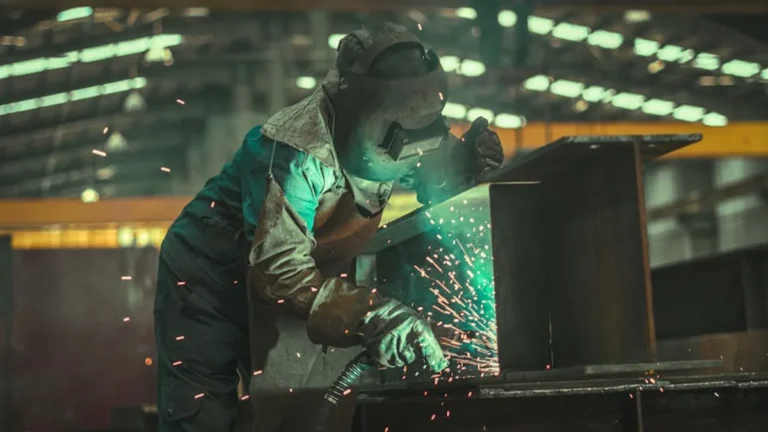
All students and instructors must wear appropriate PPE at all times in the welding area. This includes:
- Welding Helmet: Auto-darkening helmets are recommended for ease of use and consistent protection. Ensure appropriate shade levels for the welding process.
- Safety Glasses: Worn under the helmet and whenever not actively welding but still in the shop.
- Flame-Resistant Clothing: Long-sleeved shirts and pants made of cotton or natural fibers, or specialized welding jackets. Avoid synthetics which can melt.
- Welding Gloves: Heavy-duty, heat-resistant gloves for hand protection from heat, sparks, and UV radiation.
- Steel-Toed Boots: Protects feet from falling objects and sparks.
Pro Tip: Implement a "buddy system" for new welders. This ensures immediate assistance in case of an issue and promotes peer learning while reinforcing safety awareness. Regular equipment checks, including ventilation systems and ground clamps, are also critical.
Understanding Welding Processes and Material Selection
High school programs typically focus on one or two core welding processes. Understanding the capabilities and limitations of each process, alongside appropriate material selection, is crucial for project success.
Common Welding Methods for High School
- MIG (Gas Metal Arc Welding): Often preferred for beginners due to its relative ease of learning, faster travel speeds, and cleaner welds. Uses a continuously fed wire electrode and shielding gas.
- Stick (Shielded Metal Arc Welding): A versatile process, good for outdoor use and thicker materials. Requires more skill to master arc length and rod manipulation.
- TIG (Gas Tungsten Arc Welding): Produces high-quality, precise welds, but requires significant dexterity and coordination. Often introduced at more advanced stages.
Material Selection: For most high school projects, mild steel (e.g., A36, 1018) in various forms (flat bar, angle iron, square tubing) is ideal. It is inexpensive, readily available, and welds easily with MIG or Stick processes. Aluminum can be introduced with TIG or specialized MIG setups for more advanced students.
Detailed Project Ideas and Specifications
Practical projects reinforce theoretical knowledge and develop motor skills. Here are examples categorized by complexity:
Beginner Welding Projects
These focus on straight lines, basic joint types, and consistent bead placement.
- Small Metal Cube: Practice cutting, fitting, and welding all sides of a simple box. Focus on squareness and full penetration.
- Picture Frame: Involves precise cutting, mitered corners, and careful tacking before final welds. Teaches attention to detail.
- Steel Coasters: Cut small squares or circles, weld a simple border or feet. Excellent for practicing short, controlled beads.
Intermediate Welding Projects
Introduce more complex shapes, multiple joints, and basic fabrication.
- Small Workbench or Cart: Requires measuring, cutting, fitting, and welding multiple pieces of square tubing or angle iron. Focuses on structural integrity and assembly.
- Metal Tool Rack: Design and fabricate a wall-mounted rack for hand tools. Involves bending, multiple attachment points, and potentially different material thicknesses.
- Fire Pit Ring (Simple Design): Cut and roll sheet metal, then weld the seam. Adds an element of forming and larger-scale assembly.
Advanced Welding Projects
These demand higher precision, multi-process skills, and creative problem-solving.
- Custom Shop Tools (e.g., Welding Clamps, Grinder Stands): Students design and fabricate functional tools, applying advanced fitting and welding techniques.
- Decorative Metal Art or Small Sculptures: Encourages artistic expression while requiring complex cuts, bends, and intricate welding of various components.
- Small Trailer or Utility Dolly Frame: A larger-scale project emphasizing structural design, load-bearing considerations, and critical measurement.
Acquiring Materials and Consumables: A Buyer's Guide
Sourcing the right materials and consumables efficiently is key to maintaining project flow and budget control.
Key Consumables and Materials
- Welding Wire/Rods: For MIG, ER70S-6 wire in.023",.030", or.035" is common. For Stick, E6010, E6011, E6013, and E7018 rods cover most applications. Match rod diameter to material thickness.
- Shielding Gas: For MIG, 75% Argon/25% CO2 (C25) is standard for mild steel. Pure Argon for TIG on most materials.
- Base Metals: Purchase mild steel in various stock forms (angle iron, square tubing, flat bar, sheet metal) from local metal suppliers or fabrication shops. Consider buying "drops" or scrap pieces for practice to reduce cost.
- Grinding Discs and Cut-Off Wheels: Essential for material preparation and finishing. Stock various grits and sizes.
- Welding Lens Covers: Keep a supply of clear inner and outer lens covers for helmets.
Best for: Ensuring a continuous supply of necessary components for ongoing project work and skill practice.
Preparing for Successful High School Welding Experiences
Beyond the technical aspects, fostering a culture of continuous learning and quality control enhances the educational value of welding projects. Emphasize the importance of joint preparation, consistent parameters, and thorough inspection.
Encourage students to document their projects, including design sketches, material lists, and photos of the welding process and finished product. This creates a portfolio and reinforces the planning and execution stages. Regular feedback on weld quality, structural integrity, and aesthetic finish helps students refine their skills. The objective extends beyond simply completing a project; it's about understanding the "why" behind each step and building a robust skill set applicable to future careers or hobbies.
Frequently Asked Questions
What is the most accessible welding process for high school students?
MIG welding is widely considered the most accessible process for beginners due to its relatively fast learning curve, consistent results, and ease of use compared to Stick or TIG.
What are common safety hazards in a high school welding shop?
Common hazards include arc flash (UV radiation), fumes, burns from hot metal or sparks, electrical shock, and fire. Proper PPE, ventilation, and adherence to safety protocols mitigate these risks.
How can students practice welding techniques without using excessive materials?
Students can practice bead-on-plate welds on scrap metal, focusing on consistent travel speed, arc length, and angle. This develops muscle memory and control before attempting complex joints or projects.
What are ideal material thicknesses for high school welding projects?
For most beginner to intermediate projects, material thicknesses ranging from 1/8 inch (0.125") to 1/4 inch (0.250") are suitable. These thicknesses are manageable for common welding processes and equipment.