Steel remains a foundational material in construction, valued for its high strength-to-weight ratio, durability, and adaptability. Understanding its common applications is crucial for any project manager, engineer, or developer aiming to optimize structural integrity, cost-efficiency, and design flexibility. The selection of specific steel forms and their integration into a build directly impacts a structure's lifespan, seismic performance, and overall construction timeline. This overview details steel's primary roles, providing context for its widespread adoption across diverse building types and infrastructure projects.
Structural Framing: The Backbone of Buildings
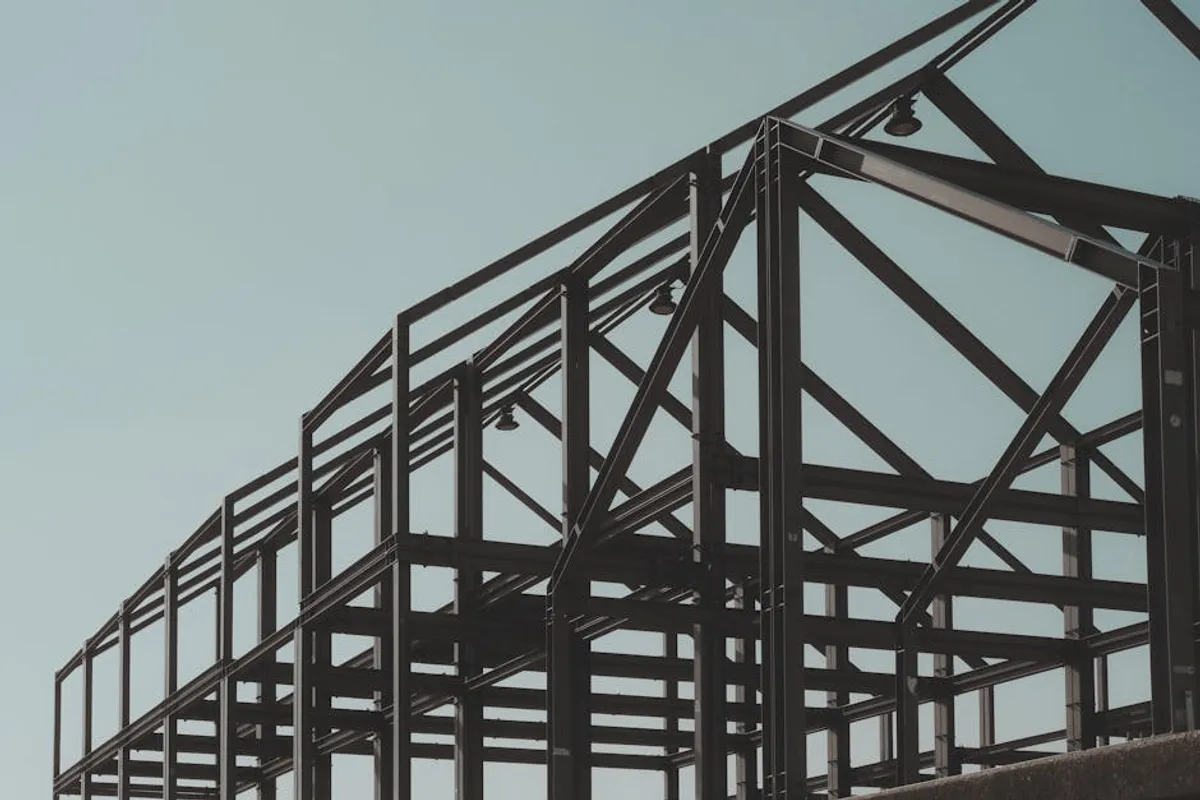
Steel's inherent strength makes it ideal for creating the skeletal framework of most modern buildings, from high-rises to industrial complexes. Its ability to withstand significant tensile and compressive forces allows for larger spans and taller structures than many alternative materials.
I-Beams and H-Beams: Load-Bearing Efficiency
These profiles are fundamental to steel construction, designed for optimal load distribution. I-beams feature a cross-section resembling the letter "I," while H-beams (often called wide-flange beams) have broader flanges. Both are engineered to resist bending and shear forces, making them indispensable for horizontal support in floors and roofs.
Best for: Main girders, floor joists, roof supports in commercial, industrial, and residential multi-story buildings, where long spans and high load capacities are critical.
Steel Columns: Vertical Support Systems
Columns transfer vertical loads from beams and upper floors down to the foundations. Steel columns, often fabricated from H-sections or hollow structural sections (HSS), offer superior compressive strength. Their slender profiles also contribute to maximizing usable floor space within a building.
Best for: Primary vertical load-bearing elements in skyscrapers, warehouses, and any structure requiring robust, space-efficient vertical support.
Trusses: Spanning Large Distances
Steel trusses, assemblies of interconnected members forming a rigid framework, are exceptionally efficient for bridging vast open spaces without intermediate supports. Their triangular configuration distributes forces effectively, allowing for lightweight yet incredibly strong structures.
Best for: Roof structures for large assembly halls, sports arenas, aircraft hangars, and convention centers where column-free interiors are essential.
Reinforcing Concrete with Steel
While concrete excels in compressive strength, its tensile strength is relatively low. Steel reinforcement addresses this limitation, creating a composite material with enhanced performance.
Rebar: Enhancing Tensile Strength
Reinforcing bars, or rebar, are steel rods or meshes embedded within concrete to absorb tensile forces and prevent cracking. The thermal expansion coefficients of steel and concrete are very similar, ensuring they expand and contract together without causing internal stress.
Best for: Foundations, slabs, beams, columns, and walls in virtually all concrete structures, significantly improving their resistance to bending, shear, and seismic activity.
Pro Tip: When specifying steel for structural applications, always consider the grade and alloy. High-strength low-alloy (HSLA) steels offer improved strength-to-weight ratios and better corrosion resistance than standard carbon steels, potentially reducing material volume and long-term maintenance costs for specific project demands. Verify material certifications to ensure compliance with structural design codes and performance expectations.
Facades, Roofing, and Interior Components
Steel's versatility extends beyond the primary structure, influencing a building's envelope and internal aesthetics.
Steel Cladding and Roofing: Protection and Aesthetics
Steel sheets and panels are widely used for building exteriors due to their durability, weather resistance, and range of finishes. Corrugated, ribbed, or flat panels provide a protective skin, often incorporating insulation for energy efficiency. Steel roofing offers longevity and can be designed for various aesthetic outcomes.
Best for: Industrial building exteriors, commercial facades, contemporary architectural designs, and roofing systems requiring low maintenance and high durability.
Staircases and Handrails: Functional Design
Steel is a preferred material for staircases, balustrades, and handrails because of its strength, ability to be fabricated into intricate designs, and fire resistance. These elements can be pre-fabricated off-site, streamlining installation and ensuring consistent quality.
Best for: Commercial and public buildings requiring robust, compliant, and often aesthetically prominent vertical circulation elements.
Specialized Construction: Beyond Standard Builds
Steel's unique properties make it indispensable for complex engineering challenges and specialized infrastructure.
Bridge Construction: Durability and Span
Steel is the material of choice for many long-span bridges due to its high strength, fatigue resistance, and ability to be fabricated into complex structural forms like suspension cables, arch ribs, and truss girders. Its ductility allows it to absorb significant energy, crucial for structures exposed to dynamic loads.
Best for: Suspension bridges, cable-stayed bridges, truss bridges, and railway bridges where large spans, high load capacities, and long service life are paramount.
Industrial Facilities: Strength for Heavy Loads
Warehouses, factories, and power plants often rely heavily on steel construction. Its ability to support heavy machinery, overhead cranes, and large storage capacities, combined with its fire resistance and long-term stability, makes it ideal for demanding industrial environments.
Best for: Manufacturing plants, distribution centers, power generation facilities, and petrochemical complexes that require robust, adaptable, and safe structural solutions.
Seismic Resistance: Enhancing Structural Integrity
In earthquake-prone regions, steel's ductility—its ability to deform significantly without fracturing—is a critical advantage. Steel frames can absorb and dissipate seismic energy, allowing structures to sway and return to their original position, reducing the risk of catastrophic failure.
Best for: Buildings and infrastructure in active seismic zones, where material resilience and energy absorption capabilities are vital for occupant safety and structural preservation.
Strategic Application of Steel in Projects
Choosing the right steel application for a construction project hinges on several factors: the required structural performance, budget constraints, aesthetic goals, and environmental considerations. Steel's recyclability contributes to sustainable building practices, while its pre-fabrication potential can accelerate construction schedules and improve site safety. Project success often correlates directly with a meticulous selection of steel types and fabrication methods, ensuring optimal performance across the structure's lifecycle. Consulting with structural engineers and material specialists early in the design phase is essential to leverage steel's full range of benefits effectively.
Frequently Asked Questions
What are the primary advantages of using steel in construction?
Steel offers high strength-to-weight ratios, excellent ductility, superior durability, and the ability to be pre-fabricated off-site, which can accelerate construction. It is also a highly recyclable material, contributing to sustainable building practices.
How does steel contribute to a building's sustainability?
Steel is 100% recyclable without loss of properties, making it a key component of circular economy principles in construction. Its durability also contributes to longer building lifespans, reducing the need for premature replacement and associated resource consumption.
Is steel fire-resistant?
While steel is non-combustible, its strength can degrade at very high temperatures during a fire. To maintain structural integrity in fire conditions, steel structures are often protected with fire-resistant coatings, encasements, or intumescent paints.
Can steel be used in corrosive environments?
Standard carbon steel can corrode when exposed to moisture and oxygen. However, various protective measures, such as galvanization, protective coatings, or the use of stainless steel alloys, are employed to ensure its durability in corrosive environments like coastal areas or industrial settings.