Navigating the world of steel fabrication demands a precise understanding of its specialized vocabulary. For project managers, engineers, procurement specialists, and anyone involved in specifying or purchasing fabricated steel components, a clear grasp of these terms is not merely academic; it is fundamental for ensuring project accuracy, cost efficiency, and structural integrity. Misinterpretations can lead to costly rework, delays, and compromised safety. This guide demystifies the core terminology, providing a practical foundation for effective communication and informed decision-making throughout the fabrication process.
Fundamental Fabrication Processes
Steel fabrication involves transforming raw steel materials into finished products through various methods. Understanding these foundational processes clarifies how components are shaped and prepared.
Cutting Methods
Cutting is the initial step in most fabrication projects, separating raw material into desired sizes and shapes. The choice of method depends on material thickness, required precision, and production volume.
- Shearing: A mechanical process using a straight blade to cut sheet metal. It's cost-effective for straight-line cuts on thinner materials, producing clean edges without material loss from kerf.
- Sawing: Utilizes a saw blade (band saw, cold saw) to cut through various steel profiles, including beams, pipes, and plates. It's versatile for different material thicknesses but generally slower than thermal methods.
- Plasma Cutting: Employs an electrically heated gas to cut through electrically conductive materials. It offers high speed and precision for medium to thick plates, suitable for complex shapes.
- Laser Cutting: Uses a focused laser beam to melt and vaporize material. Known for exceptional precision, fine detail, and smooth edge finishes, it's ideal for intricate designs and thinner gauge materials.
- Oxy-fuel Cutting: A thermal process using oxygen and a fuel gas (e.g., acetylene) to preheat steel to its ignition temperature, then uses a stream of oxygen to cut and remove the molten metal. Effective for very thick steel plates.
Forming Techniques
Forming processes alter the shape of steel without removing material, creating bends, curves, or specific profiles.
- Bending: Applying force to steel to create an angle. Press brakes are commonly used for bending plates and sheets, while roll bending creates large radii.
- Rolling: Passing steel through a series of rollers to reduce thickness, create specific profiles (like I-beams or channels), or form cylindrical shapes from flat plates.
- Punching: Using a punch and die to create holes or specific cutouts in sheet metal. It's a fast and economical method for repetitive hole patterns.
- Stamping: A process that uses a press to form flat sheet metal into various shapes, often involving a die. It's highly efficient for mass production of consistent parts.
Joining Methods
Joining connects separate steel components to form a larger assembly.
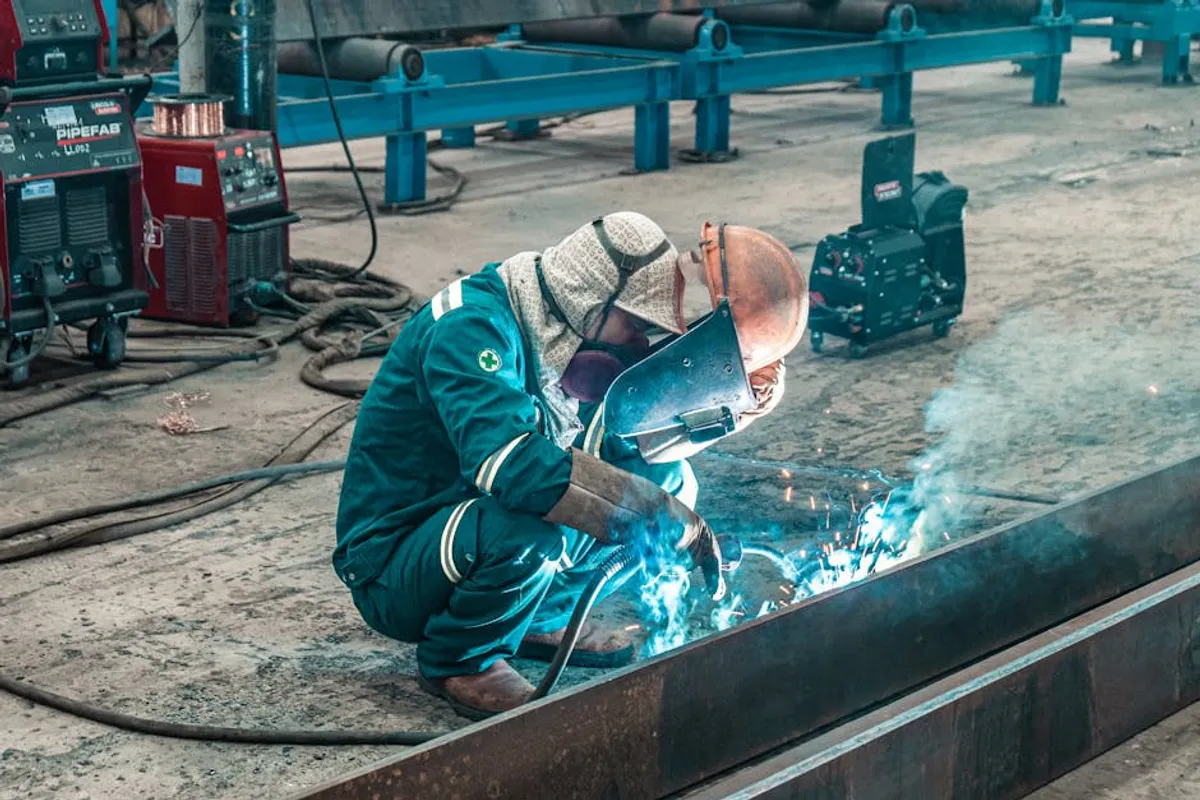
Welding: Fusing two or more metal pieces by applying heat, pressure, or both, often with a filler material. Common types include:
- MIG (Gas Metal Arc Welding): Uses a continuous wire electrode and a shielding gas. It's fast, versatile, and suitable for a wide range of materials and thicknesses, often used for structural steel.
- TIG (Gas Tungsten Arc Welding): Employs a non-consumable tungsten electrode and an inert shielding gas. Known for high-quality, precise welds, especially on thinner materials and exotic alloys, offering excellent control.
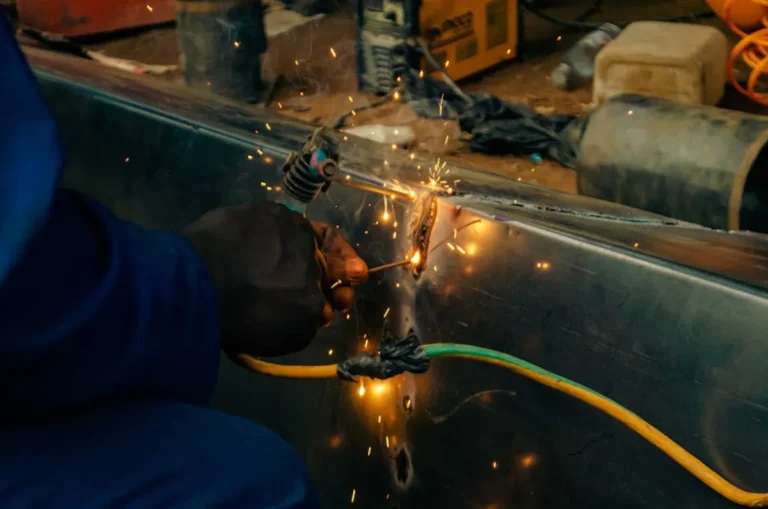
- Stick (Shielded Metal Arc Welding): Uses a consumable electrode coated with flux. It's robust, portable, and effective for outdoor conditions and various material thicknesses, though slower than MIG.
Bolting: Connecting components using threaded fasteners (bolts, nuts, washers). It allows for disassembly and is often used for field connections or where welding is impractical.
Riveting: A permanent joining method using rivets, which are deformed to hold components together. Less common in modern structural steel but still used in specific applications.
Pro Tip: Understanding Tolerances
Tolerances define the permissible variation in dimensions, angles, or shapes of a fabricated part. Specifying appropriate tolerances is critical. Too tight, and fabrication costs increase significantly; too loose, and parts may not fit or function correctly. Always discuss and agree on tolerance requirements early in the project to avoid costly rework and ensure proper assembly.
Key Structural Elements and Materials
Familiarity with common steel forms and material types is essential for specifying components accurately.
Common Steel Profiles
Steel is produced in various standard shapes, each suited for different structural applications.
- Beams (I-beam, H-beam, W-beam): Long, load-bearing structural members designed to resist bending. The "W" designation (Wide Flange) is common in construction, offering excellent strength-to-weight ratios.
- Columns: Vertical structural members designed to transfer compressive loads. Often made from H-beams, W-beams, or HSS.
- Plates: Flat sheets of steel, typically thicker than 1/4 inch (6mm), used for structural components, base plates, or to reinforce other members.
- Channels (C-channels): U-shaped structural members, often used as framing or for bracing.
- Angles (L-angles): L-shaped structural members, used for bracing, connections, or light framing.
- HSS (Hollow Structural Sections): Enclosed tubular shapes (square, rectangular, circular) offering high strength in multiple directions, commonly used for columns, trusses, and architectural elements.
Material Types
The type of steel chosen impacts its strength, corrosion resistance, and workability.
- Carbon Steel: The most common and cost-effective steel, primarily iron with carbon content up to 2.1% by weight. It's known for its strength and versatility but is susceptible to corrosion.
- Stainless Steel: An alloy of iron, chromium (minimum 10.5%), and often nickel, offering excellent corrosion resistance due to a passive chromium oxide layer. Various grades exist, each with different properties (e.g., 304 for general use, 316 for marine environments).
- Alloy Steel: Steel that contains other elements like manganese, silicon, nickel, titanium, and copper in varying proportions to enhance specific properties such as strength, hardness, toughness, or corrosion resistance.
Finishing and Quality Control Terms
The final steps in fabrication involve surface treatments and verification of quality.
Surface Finishing
Finishes protect steel from corrosion and enhance its appearance.
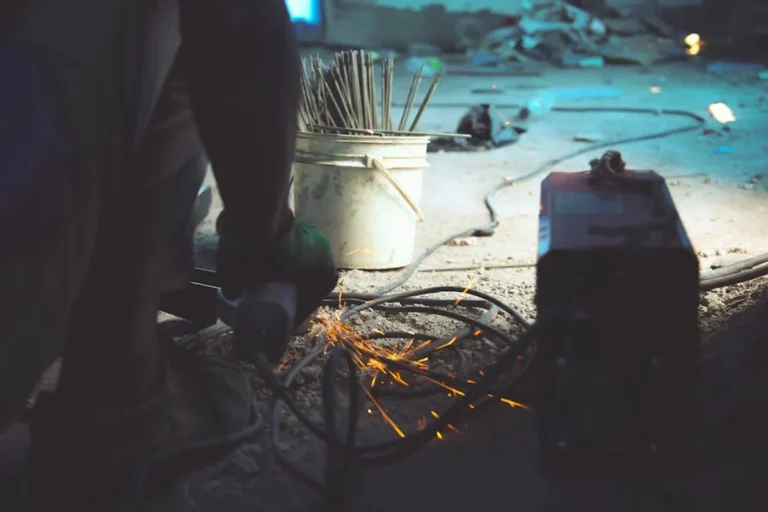
- Grinding: Abrasive removal of material to smooth welds, remove sharp edges, or prepare surfaces for further treatment.
- Sandblasting (Abrasive Blasting): Propelling abrasive material at high speed to clean, roughen, or prepare a surface, improving paint adhesion.
- Painting: Applying a protective coating for corrosion resistance and aesthetic purposes. Different paint systems offer varying levels of durability and protection.
- Powder Coating: Applying a dry powder that is then heated to form a protective layer. It offers a durable, uniform, and environmentally friendly finish.
- Galvanizing: Dipping fabricated steel into a bath of molten zinc to create a corrosion-resistant coating. Hot-dip galvanizing provides a robust, long-lasting protective layer.
Quality Assurance and Inspection
Ensuring fabricated components meet specified standards is critical for safety and performance.
- Tolerance: The permissible deviation from a specified dimension or feature. Critical for fit-up and assembly.
- NDT (Non-Destructive Testing): Inspection methods that evaluate material properties or defects without damaging the part. Common NDT methods include:
- Visual Inspection: The most basic NDT, checking for surface defects, weld quality, and dimensional accuracy.
- Ultrasonic Testing (UT): Uses high-frequency sound waves to detect internal flaws, measure thickness, and characterize material properties.
- Magnetic Particle Testing (MPT): Detects surface and near-surface discontinuities in ferromagnetic materials by applying magnetic fields and iron particles.
- Dye Penetrant Testing (DPT): Uses a liquid penetrant to reveal surface-breaking defects in non-porous materials.
- Mill Test Report (MTR): A document provided by the steel manufacturer detailing the chemical composition and mechanical properties of a specific batch of steel. Essential for material traceability and verification.
Applying Your Knowledge for Better Project Outcomes
Understanding these steel fabrication terms empowers you to engage more effectively with fabricators, engineers, and project stakeholders. This foundational vocabulary facilitates clearer specifications, reduces ambiguity in communication, and enables more accurate cost estimations. By speaking the same language as your fabrication partners, you can better anticipate challenges, ensure quality control, and ultimately deliver projects on time and within budget.
Frequently Asked Questions
What is the primary difference between fabrication and manufacturing?
Fabrication typically involves creating custom components or structures from raw materials, often for specific projects or unique designs. Manufacturing, in a broader sense, often refers to the mass production of standardized products using assembly lines and repeatable processes.
Why is material traceability important in steel fabrication?
Material traceability, often verified through Mill Test Reports (MTRs), ensures that the steel used in a project meets the specified grade and properties. This is crucial for structural integrity, safety compliance, and regulatory requirements, allowing for verification of material quality from origin to installation.
What factors influence the choice of welding method?
The selection of a welding method depends on several factors, including material type and thickness, required weld quality and strength, production speed, cost efficiency, joint configuration, and the environment where welding will occur. For instance, MIG welding is fast for production, while TIG offers precision for critical applications.
How do environmental factors impact steel finishing choices?
Environmental exposure significantly dictates the choice of steel finish. For indoor, non-corrosive environments, paint might suffice. However, for outdoor or harsh, corrosive conditions (e.g., marine, industrial), more robust finishes like hot-dip galvanizing, specialized powder coatings, or specific stainless steel grades are essential to prevent premature degradation and ensure long-term performance.